
Study Anthropology Abroad with Scholarship Opportunities


Study abroad expert advice
Don't waste time! just fill the form to get help.
Anthropology Scholarships for Study Abroad
Anthropology scholarships provide financial opportunities for students who want to study human societies, cultures, languages, biological diversity, human evolution, and social change. The discipline examines how people live, interact, communicate, adapt, and develop across different places and periods.
For Pakistani and international students, studying Anthropology abroad can provide access to diverse academic perspectives, fieldwork opportunities, research resources, and interdisciplinary programs. Scholarships may support undergraduate, master's, doctoral, and research-based study in Anthropology and closely related subjects.
What Is Anthropology?
Anthropology is the study of humans from biological, cultural, social, linguistic, and archaeological perspectives. It combines approaches from the social sciences, humanities, and natural sciences to understand human life in both the past and present.
Depending on the academic program, students may investigate communities and cultures, human evolution, ancient societies, languages, health, migration, technology, identity, or the relationship between people and their environments.
Anthropology is also strongly research-oriented. Fieldwork, interviews, observation, ethnography, laboratory analysis, archival research, and comparative studies can all be part of an anthropology education.
Anthropology Scholarships Abroad
Scholarships for Anthropology may be listed under different names depending on the university or funding provider. Students can find opportunities under Anthropology, Social Anthropology, Cultural Anthropology, Biological Anthropology, Archaeological Anthropology, Linguistic Anthropology, Medical Anthropology, or related interdisciplinary programs.
Funding can come from universities, governments, research institutions, foundations, museums, cultural organizations, and other academic bodies. Students should therefore search both Anthropology scholarships and related subject areas when exploring available opportunities.
Major Areas of Anthropology
Anthropology includes several major subfields that allow students to develop specialized interests.
Cultural and Social Anthropology: Examines cultures, traditions, social relationships, institutions, beliefs, communities, and everyday life.
Archaeological Anthropology: Studies past human societies through artifacts, sites, landscapes, material culture, and scientific analysis.
Biological Anthropology: Explores human evolution, genetics, biological diversity, primates, adaptation, and human biology.
Linguistic Anthropology: Investigates language, communication, identity, social interaction, and the cultural role of language.
Applied Anthropology: Uses anthropological knowledge to address practical issues in areas such as development, education, organizations, public services, and community programs.
Emerging and Interdisciplinary Anthropology Research
Modern Anthropology extends beyond traditional cultural and archaeological studies. Students may also find research opportunities in medical anthropology, environmental anthropology, digital anthropology, migration studies, gender and identity, globalization, political anthropology, economic anthropology, and science and technology.
Medical anthropology examines health, illness, healthcare, inequality, and the social and cultural factors affecting health. Environmental anthropology explores relationships between people, ecosystems, climate change, and environmental transformation. Digital anthropology investigates how technologies, social media, data, and digital platforms influence human experience.
Anthropology can also intersect with development, public policy, international studies, gender studies, environmental sciences, history, medicine, and other disciplines.
Anthropology Fieldwork and Research
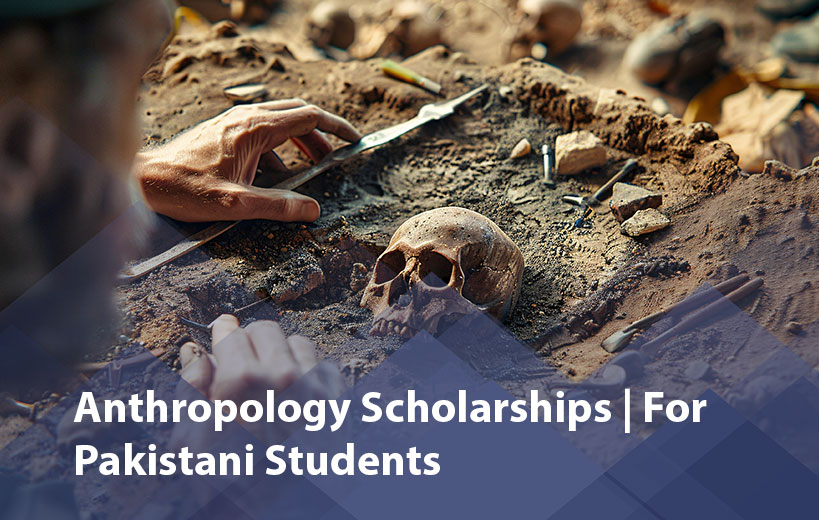
Fieldwork is an important component of many anthropology programs, particularly in sociocultural and archaeological research. Students may conduct interviews, participant observation, ethnographic studies, community-based research, surveys, archival work, or archaeological field studies.
Research funding can sometimes help students meet expenses related to fieldwork, data collection, travel, research materials, laboratory work, or other approved academic activities. Anthropology departments also offer dedicated student research grants and field-research funding in some programs.
Who Can Apply for Anthropology Scholarships?
Eligibility varies according to the scholarship and degree program. Students with backgrounds in the following areas may find relevant opportunities:
- Anthropology
- Sociology
- History
- Archaeology
- Linguistics
- Psychology
- Social Sciences
- Humanities
- International Relations
- Development Studies
- Biology and related sciences
Some interdisciplinary programs accept applicants from broader academic backgrounds, while research-focused scholarships may require a clearly defined research topic or proposal.
Study Levels
Anthropology scholarships may be available at different stages of higher education.
Bachelor's: Undergraduate programs introduce students to human cultures, societies, archaeology, biological anthropology, and related subjects.
Master's: Graduate study can provide specialized training in social anthropology, cultural studies, archaeology, medical anthropology, development, heritage, or other research areas.
PhD and Research: Doctoral opportunities generally involve advanced independent research, detailed fieldwork, theoretical study, and dissertation development. Research scholarships may support specialized projects within particular anthropology subfields.
Scholarship Benefits
The financial support offered by an Anthropology scholarship depends on the individual funding program. Possible benefits can include:
- Full or partial tuition fee coverage
- Monthly or living allowance
- Accommodation support
- Research or fieldwork funding
- Travel assistance
- Health insurance
- Academic resources or study-related expenses
Applicants should always review the funding conditions of each opportunity because coverage can differ significantly.
Documents Required
Common application documents may include:
- Academic transcripts and certificates
- CV or resume
- Statement of purpose
- Motivation letter
- Recommendation letters
- English-language test results where required
- Research proposal for postgraduate research
- Passport or identification documents
- Previous research or fieldwork evidence where relevant
For research-based applications, students should clearly explain their research question, methodology, objectives, and expected contribution.
Career Opportunities in Anthropology
An Anthropology degree can lead to careers in research, education, cultural organizations, development, heritage, public services, and community-focused work.
Graduates may work in areas such as:
- Anthropological research
- Archaeology and heritage
- Cultural resource management
- Museums and cultural institutions
- NGOs and development organizations
- Community development
- Social research
- Public policy
- International development
- Market and consumer research
- Education and academia
- Humanitarian and social programs
Career options depend on the student's specialization, academic qualification, research experience, and professional requirements.
Why Study Anthropology Abroad?
Studying Anthropology abroad can expose students to different communities, cultures, research traditions, and academic approaches. International programs may provide opportunities for field-based learning, cross-cultural research, interdisciplinary collaboration, and access to specialized laboratories, archives, museums, and research centers.
For Pakistani students, Anthropology can also provide useful perspectives on culture, migration, development, heritage, social change, health, communities, and relationships between local and global societies.
Explore Anthropology Scholarships
Anthropology is a broad discipline covering culture, society, archaeology, human evolution, language, health, environment, technology, migration, development, and human diversity.
Students can explore Anthropology scholarship opportunities on this page and compare them according to study level, eligibility, destination, funding benefits, research area, academic requirements, and deadline.
Before applying, applicants should carefully review the latest eligibility criteria and scholarship conditions to find opportunities that match their academic background and Anthropology interests.
Related Scholarships
| Scholarship Name | Country | Education Level | Apply By |
|---|---|---|---|
| France |

|
27 January 2027 | |
| Egypt |
Bachelors
|
18 November 2026 | |
| Europe |
Masters
|
04 January 2027 | |
| UK |
PhD
|
23 November 2026 | |
| UK |
PhD
|
04 December 2026 | |
| Sweden |
PhD
|
04 November 2026 |







Get Latest Scholarships in Your Email
Subscribe to our scholarships alert and get notified for every new scholarships of your choice
Subscribe to Scholarship Alerts
Get the latest scholarships delivered to your inbox
Thank You!
You've successfully subscribed to our scholarship alerts.
Redirecting in 3