
International Trade Scholarships to Study Abroad for Pakistani Students


Study abroad expert advice
Don't waste time! just fill the form to get help.
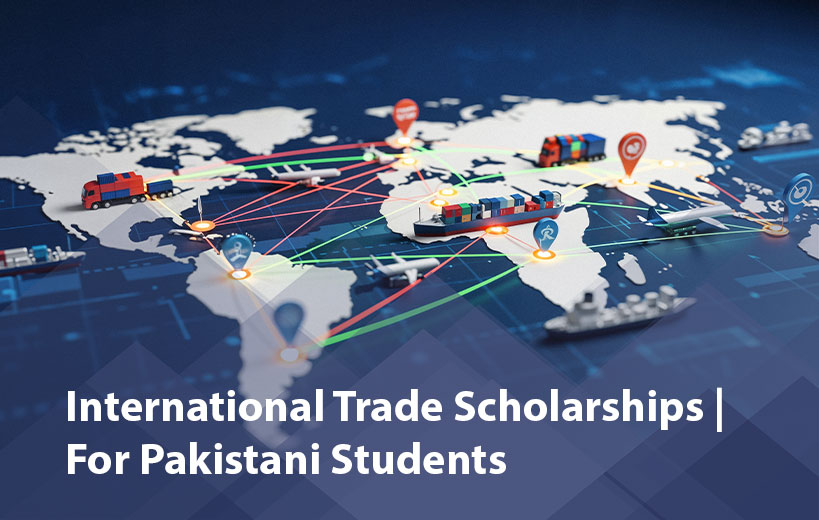
International Trade Scholarships for Pakistani Students to Study Abroad
International Trade is a multidisciplinary field that examines how goods, services, investment, finance, and business activities move between countries. It combines international economics, business management, finance, logistics, trade policy, marketing, and global commerce. For Pakistani students interested in building careers in international business and global markets, studying International Trade abroad can provide valuable academic knowledge and international exposure.
International Trade scholarships can help eligible students manage the cost of studying abroad at undergraduate, master's, PhD, and research levels. Depending on the scholarship provider, funding may contribute toward tuition fees, living expenses, accommodation, travel, research costs, or other educational expenses.
StudyAbroad.pk brings together scholarship opportunities related to International Trade and closely connected fields, helping Pakistani students explore funding options according to their academic level, destination, and area of interest.
What Is International Trade?
International Trade focuses on the exchange of products, services, capital, and resources between countries. Students learn how international markets operate and how governments, businesses, financial institutions, and global organizations participate in cross-border commerce.
The subject also examines issues such as tariffs, imports and exports, trade agreements, foreign investment, supply chains, international finance, trade regulations, and economic cooperation.
Depending on the university and degree program, International Trade may be offered as a dedicated specialization or as part of economics, international business, commerce, finance, business administration, development studies, or related programs.
Why Study International Trade Abroad?
Studying International Trade abroad allows students to learn about global markets from an international perspective. Universities in different countries may offer specialized courses, research opportunities, industry projects, and access to international business networks.
Students may develop knowledge of:
- International markets and economic systems
- Import and export operations
- International business strategy
- Global supply chains
- Trade policy and regulations
- International finance
- Foreign investment
- Global marketing
- Trade negotiations
- Economic development
- Cross-border business operations
International study can also expose students to different trade systems and business environments, helping them understand how international commerce operates across regions.
International Trade Subjects and Specializations
International Trade is connected with several academic areas. Depending on the program, students may specialize in subjects such as:
International Economics
International economics examines economic relationships between countries, including trade flows, exchange rates, economic policies, and international markets.
Trade Policy and Regulation
This area focuses on tariffs, trade agreements, customs regulations, market access, trade barriers, and policies affecting imports and exports.
International Business
International business explores how companies operate across borders, including market expansion, international strategy, cross-cultural management, and global operations.
Trade Finance
Trade finance covers financial services and instruments used in international commerce, including payment systems, export financing, credit, currency risk, and financial risk management.
Supply Chain and Logistics
Students can study the movement of products across international markets, including transportation, procurement, warehousing, distribution, and supply chain management.
International Marketing
International marketing examines how businesses promote and sell products and services across different countries and consumer markets.
Trade Law
Trade law focuses on the legal frameworks governing international commerce, agreements, disputes, customs, and cross-border business activities.
International Trade Scholarships by Study Level
Scholarship opportunities related to International Trade may be available at different levels of higher education.
Undergraduate International Trade Scholarships
Undergraduate students can explore scholarships for programs in international business, economics, commerce, finance, supply chain management, and related fields. Requirements can include academic performance, admission to an eligible institution, English language proficiency, and other scholarship-specific conditions.
Master's Scholarships in International Trade
Master's-level opportunities can allow graduates to specialize in international economics, global business, trade policy, international finance, logistics, development economics, or related areas.
Some postgraduate programs may place greater emphasis on previous academic study, professional experience, research interests, or career objectives.
PhD Scholarships in International Trade
PhD scholarships can support advanced research in areas such as international economics, trade policy, global commerce, development, international finance, supply chains, and economic relations.
Doctoral applicants may need to provide a research proposal, academic transcripts, references, and evidence of relevant research preparation.
What Can International Trade Scholarships Cover?
The financial support offered by scholarships varies by provider and program. Some opportunities may offer partial funding, while others can provide more comprehensive financial assistance.
Possible benefits include:
- Full or partial tuition fee coverage
- Monthly living allowance
- Accommodation support
- Travel assistance
- Health insurance
- Research funding
- Academic materials
- Conference or training support
- Other study-related allowances
Students should carefully check the funding details of each opportunity because not every scholarship covers the same expenses.
Eligibility for International Trade Scholarships
Eligibility requirements depend on the scholarship, university, country, and degree level. Pakistani applicants may commonly need to meet requirements such as:
- Relevant academic qualifications
- Minimum academic grades or GPA
- Admission to an eligible program
- English language proficiency where required
- Relevant academic or professional background
- Research experience for selected doctoral opportunities
- Statement of purpose or personal statement
- Letters of recommendation
- Nationality or residency requirements
- Any additional conditions specified by the funding provider
Some International Trade-related scholarships may be offered through broader economics, business, international development, finance, or international studies programs rather than programs titled exactly "International Trade."
Documents Required for International Trade Scholarships
Applicants should prepare their documents before scholarship deadlines. Depending on the opportunity, commonly requested documents may include:
- Academic certificates and transcripts
- Degree documents
- Curriculum vitae or resume
- Statement of purpose
- Personal statement
- Letters of recommendation
- Proof of English language proficiency
- Valid passport or identification document
- University admission letter, where required
- Research proposal for relevant PhD programs
- Proof of professional experience, if applicable
The exact requirements can differ, so students should check the official application instructions for every scholarship before submitting their application.
Career Opportunities After Studying International Trade
An International Trade qualification can lead to career opportunities across business, economics, finance, logistics, government, research, and international organizations.
Depending on their specialization and professional qualifications, graduates may work as:
- International Trade Analyst
- Trade Policy Analyst
- Import and Export Specialist
- International Business Consultant
- Supply Chain Specialist
- Logistics Manager
- Trade Finance Specialist
- International Marketing Specialist
- Economic Researcher
- Trade Compliance Specialist
- Business Development Professional
- International Economics Researcher
- Trade and Development Professional
Career paths can vary depending on the student's degree, specialization, experience, and the employment regulations of the country where they work.
International Trade and Global Business
International Trade is closely connected with the growth of global businesses. Companies operating across borders need professionals who understand international markets, customs procedures, supply chains, financial systems, trade regulations, and cross-cultural business practices.
Students who combine International Trade with areas such as economics, finance, data analysis, logistics, business administration, or international relations can develop a broader understanding of global commerce.
Study Destinations for International Trade
Pakistani students can find International Trade and related programs in universities across different regions of the world. Depending on the available scholarship and degree program, potential destinations may include countries in:
- Europe
- North America
- Asia
- Australia
- The Middle East
- Other international education hubs
The availability of scholarships differs by country and institution. Students should compare destinations based on program content, tuition fees, scholarship coverage, admission requirements, living costs, and application deadlines.
How to Find International Trade Scholarships
Finding a suitable scholarship requires more than searching for programs with the exact title "International Trade." Related opportunities may be listed under economics, international business, commerce, finance, development studies, logistics, or global business.
Pakistani students can follow these steps:
- Choose the International Trade specialization or related subject they want to study.
- Select an appropriate degree level.
- Search for eligible universities and scholarship opportunities.
- Check whether Pakistani students are eligible.
- Compare tuition coverage and other financial benefits.
- Review academic and language requirements.
- Prepare the required application documents.
- Check the official application deadline.
- Submit the scholarship or university application according to the provider's instructions.
Students should verify the latest requirements and deadlines because scholarship conditions and available programs can change between application cycles.
International Trade Scholarships for Pakistani Students
International Trade offers academic pathways across economics, business, finance, logistics, policy, and global commerce. Scholarships can make it easier for Pakistani students to pursue these subjects at universities abroad and gain knowledge relevant to international markets.
On StudyAbroad.pk, students can explore International Trade scholarship opportunities and related funding options according to study level, destination, eligibility, and funding coverage.
Whether you are interested in international economics, trade policy, global business, supply chain management, trade finance, or another related specialization, reviewing each scholarship's eligibility requirements and financial benefits is an important part of the application process.
Explore the available International Trade scholarships on this page, compare relevant opportunities, and apply before the specified deadline.
Related Scholarships
| Scholarship Name | Country | Education Level | Apply By |
|---|---|---|---|
| France |

|
27 January 2027 | |
| Egypt |
Bachelors
|
18 November 2026 | |
| Europe |
Masters
|
04 January 2027 | |
| UK |
PhD
|
23 November 2026 | |
| UK |
PhD
|
04 December 2026 | |
| Sweden |
PhD
|
04 November 2026 |






Get Latest Scholarships in Your Email
Subscribe to our scholarships alert and get notified for every new scholarships of your choice
Subscribe to Scholarship Alerts
Get the latest scholarships delivered to your inbox
Thank You!
You've successfully subscribed to our scholarship alerts.
Redirecting in 3