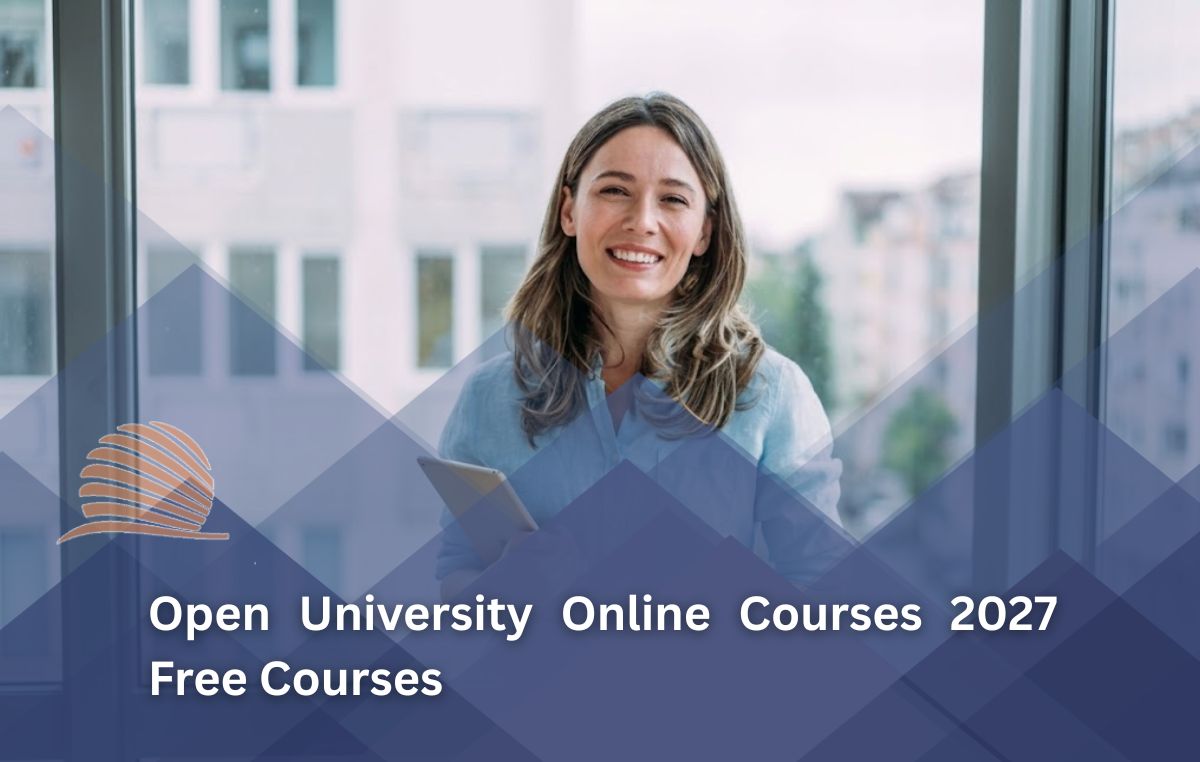
Open University Online Courses 2027 | Free Courses
September 17, 2026 • 11 Views
Study abroad expert advice
Don't waste time! just fill the form to get help.
Open University Online Courses 2027: Free Courses with Certificates
The Open University Online Courses 2027 provide learners worldwide with an opportunity to study a wide range of subjects online without paying course fees. Through its OpenLearn platform, The Open University offers hundreds of free courses covering areas such as digital and computing, business, education, health, science, mathematics, languages, history, arts, society, politics, and law.
OpenLearn is designed for flexible, self-paced learning, making it suitable for students, working professionals, and people who want to develop new skills without enrolling in a traditional university degree. The platform currently lists 948 free courses, although the catalogue can change as new courses are added and others are updated.
Open University Online Courses 2027 Overview
| Details | Information |
|---|---|
| Platform | OpenLearn |
| University | The Open University |
| Study Mode | Online |
| Course Fee | Free |
| Eligibility | Open to learners worldwide |
| Degree Level | Short courses and learning resources |
| Subjects | Business, Computing, Science, Education, Arts and more |
| Certificates | Statement of Participation available |
| Digital Badge | Available for selected courses |
| Course Duration | From a few hours to 24+ hours |
| Application Deadline | No universal deadline |
OpenLearn courses are not equivalent to an Open University degree or formally accredited university qualification. Instead, they provide free educational content and learning achievements that learners can add to their CVs and professional profiles.
What Are OpenLearn Free Online Courses?
OpenLearn is The Open University's free learning platform. It contains nearly 1,000 free courses and other educational resources that allow learners to explore topics at different levels of difficulty. Courses are available at introductory, intermediate, and advanced levels, allowing learners to choose content according to their previous knowledge and experience.
The courses are based on a variety of Open University materials, while some have been specifically developed for OpenLearn. Learners can study independently and complete courses at their own pace. This makes the platform particularly useful for people who want to improve their knowledge alongside employment, university studies or other responsibilities.
Subjects Available Through Open University Online Courses
OpenLearn provides courses across a broad selection of academic and professional subjects. The current catalogue includes categories such as Digital & Computing, Money & Business, Education & Development, Science, Maths & Technology, Health, Sports & Psychology, History & The Arts, Languages, Nature & Environment, and Society, Politics & Law.
Learners interested in technology can explore computing and digital subjects, while those interested in professional development can choose business, education or employability-related courses. The platform also contains courses in science, environmental studies, psychology, writing, history and other disciplines.
The catalogue can be filtered by subject, course level, duration and whether a course offers a digital badge. This allows learners to find courses that match their interests and available study time.
Benefits of Open University Free Online Courses
One of the main advantages of OpenLearn is that the courses are free to study. Learners can access educational content without paying tuition fees or enrolling in a conventional degree programme.
Another benefit is flexibility. OpenLearn courses can be studied online and at the learner's own pace. The platform includes short learning activities as well as courses requiring several hours of study, allowing users to choose content according to their schedules.
Many completed courses also provide a free Statement of Participation. Some selected courses additionally offer a digital badge, which learners can share through their OpenLearn profile, CV or professional networks.
These achievements can help learners demonstrate their commitment to professional development and independent learning, although they should not be presented as formal university credits.
Are OpenLearn Certificates Recognized?
OpenLearn provides Statements of Participation for completed courses, and selected courses offer digital badges. However, these achievements do not carry formal academic credit toward an Open University qualification.
Learners who want to earn a formal Open University qualification must apply and register for an appropriate Open University programme separately. OpenLearn itself does not award university degrees or formal qualifications.
Therefore, students should distinguish between completing a free OpenLearn course and becoming a registered Open University student.
Who Can Join Open University Online Courses?
OpenLearn is designed to be accessible to a broad audience. There is no minimum age for general use of the website, although users must be at least 13 years old to create an account.
The courses are available to learners regardless of their country, making them an accessible option for international students and professionals. Learners do not need to relocate to the UK because the courses are delivered online.
Some courses may have recommended previous knowledge or educational experience. OpenLearn indicates the level of each course so that learners can select introductory, intermediate or advanced material according to their background.
How to Apply for Open University Online Courses 2027?
The process is simple and does not require a conventional university admission application. Learners can visit the OpenLearn course catalogue and browse the available courses by subject, level and duration.
After selecting a course, learners can create a free OpenLearn account and enrol. An account allows users to save their progress and access achievements. While much of the learning material can be accessed without an account, enrolling through an account makes it possible to receive a Statement of Participation and, where applicable, a digital badge.
Learners should then complete the course content, including any required quizzes or activities. After meeting the completion requirements, the Statement of Participation can be accessed through the learner's OpenLearn profile.
Open University Online Courses Deadline 2027
There is no single application deadline for OpenLearn courses. Learners can browse the catalogue and start available courses according to the individual course arrangements. The platform contains courses of different lengths, from short learning activities to courses requiring more than 24 hours.
Because the catalogue is regularly updated, students should check the individual course page for the latest information before beginning a particular course.
Final Thoughts
The Open University Online Courses 2027 offer a flexible way for learners around the world to develop academic and professional knowledge without paying course fees. Through OpenLearn, learners can choose from hundreds of free courses in areas ranging from computing and business to science, education, health, arts and languages.
The platform is particularly useful for students and professionals who want to learn new skills at their own pace. While OpenLearn courses do not provide formal university qualifications or academic credit, eligible courses can provide a free Statement of Participation and, in some cases, a digital badge that can be shared as evidence of learning.
Interested learners should explore the official OpenLearn catalogue and select courses that match their educational interests, career goals, and available study time.








.png)




.png)

Muhammad Akram ch (CEO)logo hcs (1).jpg)