
Dublin City University


Study abroad expert advice
Don't waste time! just fill the form to get help.
University Facts:
- Website : https://www.dcu.ie/
- QS Ranking : #408
- Times Ranking : #284
- Contact : +353 1 700 5000
-
Country :
 Ireland
University Information:
- Address : Dublin City University, Glasnevin Campus, Collins Avenue Extension, Dublin 9, Ireland
- Contact Mobile : +353 1 700 7411
- Email : dcuglobalrecruitment@dcu.ie
About Dublin City University
Dublin City University (DCU) is a leading public university located in Dublin, Ireland. Established in 1975 as the National Institute for Higher Education, Dublin, it welcomed its first students in 1980 and officially received university status in 1989. The university is recognised for its academic excellence, research activities, technological innovation, and strong connections with industry.
DCU offers a wide range of undergraduate, postgraduate, and doctoral programmes across business, engineering, computing, science, health, education, humanities, and social sciences. Its academic approach combines classroom learning with practical experience, helping students develop professional skills and prepare for international careers.
The university has a diverse student community representing more than 120 countries. Its focus on research, entrepreneurship, and workplace learning makes it an attractive destination for international students, including those from Pakistan.
Pakistani students can also explore other universities in Ireland through StudyAbroad.pk.
Courses and Degree Programmes at Dublin City University
Dublin City University offers more than 200 degree programmes through its five faculties. Students can choose undergraduate, taught postgraduate, and research programmes according to their academic qualifications and career interests.
Popular study areas include:
- Business and Management: Accounting, finance, business administration, marketing, and international business.
- Engineering and Computing: Computer science, software engineering, electronic engineering, mechanical engineering, and data analytics.
- Science and Health: Biotechnology, biomedical sciences, health sciences, psychology, and pharmaceutical-related disciplines.
- Humanities and Social Sciences: International relations, journalism, communication, politics, languages, and social sciences.
- Education: Teacher education, educational leadership, and specialised education programmes.
- Digital Technology: Artificial intelligence, cybersecurity, cloud computing, data science, and digital innovation.
DCU also offers master's and doctoral programmes for students seeking advanced academic qualifications and specialised research opportunities.
Admission Requirements for International Students
Dublin City University welcomes applications from international students with recognised academic qualifications. Admission requirements depend on the selected programme, degree level, and applicant's previous education.
Undergraduate Admission Requirements
Students applying for bachelor's degree programmes generally need a recognised secondary school qualification equivalent to the university's entry requirements.
Pakistani applicants may apply with Intermediate (FA, FSc, ICS, or equivalent), A-Level, or other recognised qualifications. Subject requirements and academic grades depend on the selected course.
Some competitive programmes may have additional academic or subject-specific requirements.
Postgraduate Admission Requirements
Applicants interested in master's programmes generally need a recognised bachelor's degree in a relevant academic discipline. The required academic standard varies between courses.
Some programmes may also require professional experience, a CV, personal statement, academic references, or an interview.
PhD and Research Admission Requirements
Students applying for doctoral programmes generally need a relevant master's degree or an acceptable equivalent qualification. Applicants may also need to submit a research proposal, academic references, and evidence of previous research experience.
English Language Requirements
International students may need to demonstrate English language proficiency through IELTS Academic, TOEFL, PTE Academic, or another accepted examination.
A commonly listed postgraduate English language requirement is IELTS 6.5 overall, with at least 6.0 in each component for many programmes. However, requirements can differ by faculty and course.
Pakistani students should confirm the exact English language requirements before submitting their applications.
Tuition Fees at Dublin City University
Tuition fees at DCU depend on the programme, degree level, and student category. International students are generally required to pay non-EU tuition fees, which can vary considerably between academic disciplines.
For example, selected postgraduate programmes have different annual fee levels:
| Programme | Indicative Non-EU Tuition Fee |
|---|---|
| MSc in Financial Mathematics | €17,700 |
| MSc in Finance | €23,000 |
| MSc in Computing | €25,000 |
| MSc in Physiotherapy | €25,900 |
These are programme-specific fee examples for the 2026–2027 fee schedule, not a universal university fee. Tuition fees may change annually, and additional charges may apply.
Students should also budget for accommodation, food, transportation, health insurance, study materials, and personal expenses.
Cost of Living in Dublin for International Students
Dublin is an important educational, business, and technology centre in Ireland. However, accommodation and everyday expenses can represent a significant part of an international student's budget.
Living expenses depend on the type of accommodation, location, transportation, and personal lifestyle.
| Expense Category | Budget Considerations |
|---|---|
| Accommodation | University residence or private rental |
| Food | Groceries and university or local dining |
| Transportation | Bus, rail, and other public transport |
| Study Materials | Books, stationery, and academic resources |
| Health Insurance | Required cover for eligible international students |
| Personal Expenses | Mobile services and everyday needs |
Students should arrange accommodation and prepare a realistic financial plan before travelling to Ireland.
Scholarships at Dublin City University
DCU provides several scholarship opportunities for international students. These awards may offer tuition fee reductions, accommodation assistance, or other financial support, depending on the scholarship.
Important scholarship opportunities include:
- DCU International Merit Scholarships: Financial awards for eligible international students with strong academic records.
- Claddagh Scholarship: A scholarship opportunity for eligible international applicants.
- Government of Ireland International Education Scholarship: A government-funded opportunity for qualifying international students at eligible Irish institutions.
- ICOS Irish Aid Fellowships: Funding opportunities for eligible applicants under the relevant fellowship programmes.
- Faculty-Specific Scholarships: Financial support for selected academic disciplines and postgraduate programmes.
Pakistani students can explore Ireland scholarships for Pakistani students and compare other international scholarship opportunities on StudyAbroad.pk.
Scholarship eligibility, coverage, and application deadlines vary. Applicants should review the latest conditions and confirm whether their selected course qualifies.
Why Choose Dublin City University?
Dublin City University offers an international academic environment with a strong focus on innovation, research, and professional development.
Some important reasons to consider studying at DCU include:
- Internationally recognised academic qualifications.
- A broad selection of undergraduate and postgraduate programmes.
- Strong academic departments in business, engineering, computing, and science.
- Modern research laboratories and learning facilities.
- International student support and academic guidance.
- Industry partnerships and professional networking opportunities.
- Work-based learning and internship opportunities.
- Scholarships and funding opportunities for eligible international students.
DCU has a particularly strong focus on practical education. More than 80% of its undergraduate programmes offer work-based learning opportunities, helping students connect academic knowledge with professional experience.
Campus Facilities and Student Accommodation
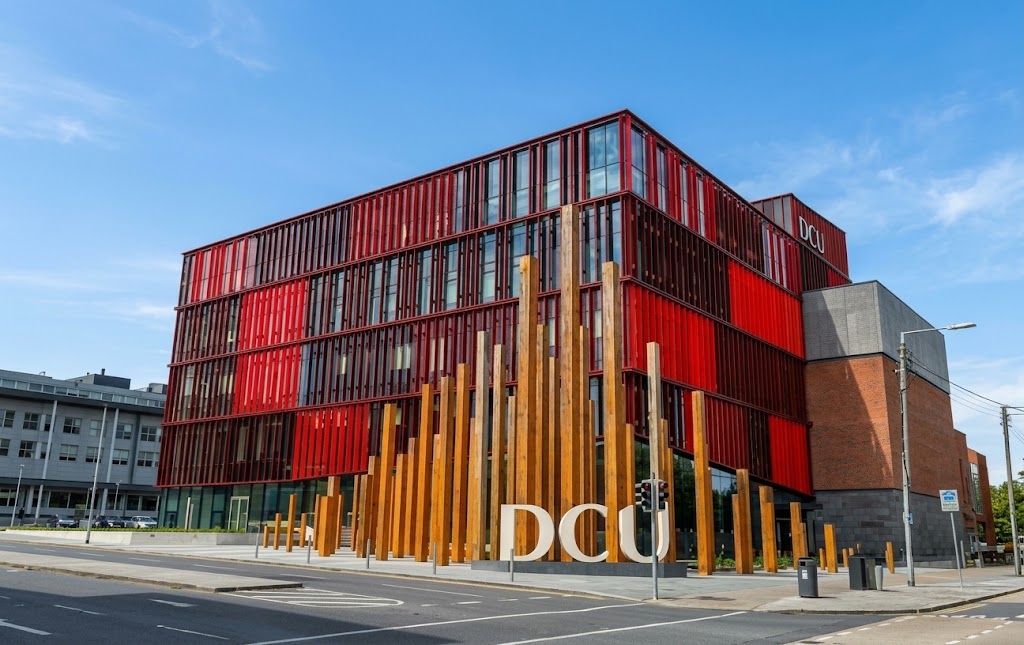
Dublin City University operates across three academic campuses in the Glasnevin and Drumcondra areas of north Dublin. These include the Glasnevin Campus, St Patrick's Campus, and All Hallows Campus.
The university provides modern facilities, including libraries, computer laboratories, research centres, sports facilities, student learning spaces, and dining options.
DCU also offers student accommodation through its campus residences. International students can explore different room options, facilities, and application procedures according to availability.
Students are encouraged to apply for university accommodation early because residential places can be limited. Those unable to secure university housing can explore private accommodation options in Dublin.
Research Opportunities and Industry Connections
Research and innovation are important parts of Dublin City University's academic environment. The university supports research across computing, engineering, biotechnology, healthcare, education, business, social sciences, and other specialist fields.
DCU works with industry partners and research organisations to support innovation and practical applications of academic research.
Postgraduate students can explore research projects, academic supervision, and potential funding opportunities. These opportunities are particularly valuable for applicants interested in master's by research and doctoral studies.
Career Opportunities and Graduate Employability
Dublin City University focuses on preparing graduates for employment through professional education, workplace learning, and industry engagement.
Students can benefit from career guidance, CV preparation, interview support, employer events, and internship opportunities where available.
Dublin is home to international businesses and organisations operating in technology, finance, pharmaceuticals, engineering, consulting, and professional services. This provides students with opportunities to explore internships and graduate employment pathways.
Eligible international graduates may also explore Ireland's Third Level Graduate Programme, subject to the applicable immigration requirements and qualification level.
How to Apply to Dublin City University from Pakistan
Pakistani students interested in studying at DCU should first select a suitable programme and review its academic and English language requirements.
The general application process includes:
- Choose an undergraduate, master's, or doctoral programme.
- Check the programme's academic entry requirements and application deadline.
- Prepare educational certificates, academic transcripts, passport details, and supporting documents.
- Arrange English language test results if required.
- Complete the online application through the university's official admission portal.
- Pay the application fee, where applicable.
- Submit additional documents or attend an interview if requested.
- Monitor the application and follow the university's admission instructions.
Students should apply early and make sure that their documents meet the requirements of their selected programme.
Ireland Student Visa Requirements for Pakistani Students
Pakistani students who receive an admission offer from DCU generally need to apply for the appropriate Irish long-stay study visa if their course lasts longer than 90 days.
The application may require a valid passport, university acceptance letter, academic documents, evidence of sufficient finances, health insurance, and other supporting paperwork.
Students should also understand the immigration registration requirements after arriving in Ireland. Visa eligibility and documentation requirements depend on the applicant's individual circumstances and the latest Irish immigration rules.
For more information, read the Ireland Student Visa Guide for Pakistani Students.
Frequently Asked Questions
Is Dublin City University good for international students?
Yes. DCU offers internationally recognised qualifications, modern academic facilities, research opportunities, workplace learning, and a diverse international student community.
Can Pakistani students apply to Dublin City University?
Yes. Pakistani students can apply for eligible undergraduate, postgraduate, and doctoral programmes if they meet the academic and English language requirements.
Does Dublin City University offer scholarships?
Yes. DCU offers international merit scholarships, Claddagh scholarships, and other university, faculty, and government-supported funding opportunities for eligible students.
What courses are available at Dublin City University?
DCU offers programmes in business, engineering, computing, science, health, education, humanities, communication, and social sciences.
What is the IELTS requirement for Dublin City University?
Many programmes require IELTS Academic 6.5 overall, with minimum component scores depending on the faculty. Applicants should check the requirements of their chosen course.
Does Dublin City University provide student accommodation?
Yes. DCU provides campus accommodation options through its residential facilities. Availability and eligibility depend on the accommodation application process.
Where is Dublin City University located?
Dublin City University is located in Dublin 9, Ireland, with its main campus in the Glasnevin area.
Official Website of Dublin City University
For updated information about international admissions, courses, tuition fees, scholarships, research programmes, student accommodation, and application deadlines, visit the university's official website:
Study abroad World Ranking

- #284 Times Higher Education Ranking
- #408 QS World Ranking

Dublin City University
Dublin City University is one of the leading universities in Azerbaijan.