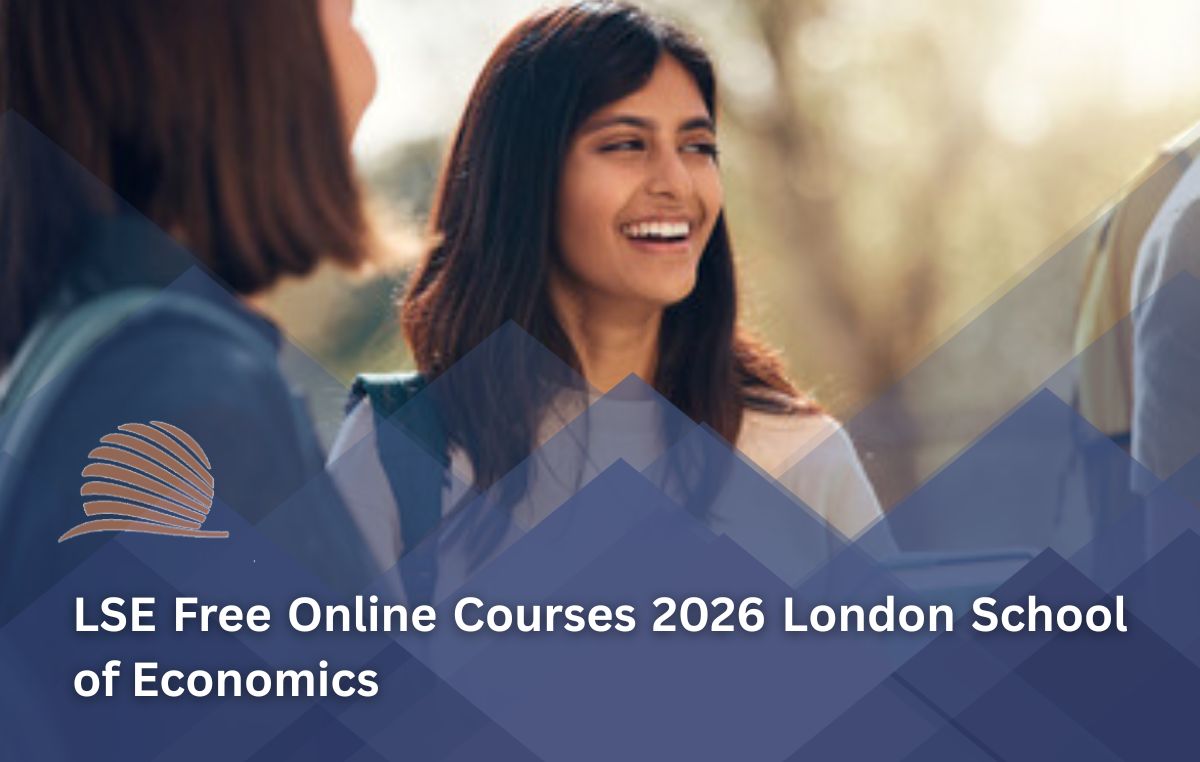
LSE Free Online Courses 2026 | London School of Economics
August 21, 2026 • 14 Views
Study abroad expert advice
Don't waste time! just fill the form to get help.
London School of Economics Free Online Courses 2026 | Learn from LSE
The London School of Economics and Political Science (LSE) free online courses provide learners with an opportunity to develop valuable academic and professional skills through online learning resources from one of the UK's leading universities. These learning opportunities are particularly useful for students, graduates and professionals who want to improve their knowledge in areas such as economics, data analysis, technology, public policy and social sciences.
LSE offers several forms of online learning. Its official platforms include self-paced programmes, online certificate courses and free digital-skills resources. However, applicants should carefully distinguish between free learning resources and paid online certificate programmes, as not every LSE online course is offered at no cost.
For students looking to strengthen their CV without committing to a full degree, LSE's free online learning resources can be a useful way to gain knowledge and develop practical skills from anywhere in the world.
LSE Free Online Courses 2026 – Key Details
| Category | Details |
|---|---|
| Institution | London School of Economics and Political Science |
| Country | United Kingdom |
| Learning Mode | Online |
| Study Type | Online learning/self-study |
| Cost | Free options available |
| Duration | Varies by course |
| Eligibility | Varies by course |
| Subjects | Economics, Data, AI, Technology, Social Sciences & More |
| Location | Online |
| Certificate | Depends on the course |
| Application | Online |
| Deadline | Varies / Some resources have no fixed deadline |
What Are LSE Free Online Courses?
LSE provides a range of online educational resources that allow learners to study outside a traditional classroom. These resources include free online learning opportunities as well as paid professional programmes.
One of LSE's particularly useful resources is its Digital Skills Lab, which provides online self-study courses covering skills such as AI, Python, R and other digital tools. LSE describes these Moodle-based courses as free online learning opportunities for developing digital skills.
LSE also provides self-paced programmes that allow learners to study at their own speed without fixed start or end dates. These programmes are designed for people who want flexible professional development alongside work or other commitments.
Subjects Available
The range of subjects available through LSE's online learning resources is broad. Depending on the platform and programme, learners may find opportunities related to:
- Economics
- Finance
- Business
- Data Analysis
- Artificial Intelligence
- Python
- R programming
- Excel
- Power BI
- SQL
- Statistics
- Public Policy
- International Relations
- Social Sciences
- Management
- Digital Transformation
- Law and Governance
LSE's Digital Skills Lab currently highlights skills including Excel, R, Python, Power BI, Stata, SPSS, SQL and Gen-AI, with free online self-study resources available through its Moodle courses.
Free LSE Digital Skills Courses
For learners interested in technology and data, LSE's Digital Skills Lab is particularly relevant.
The university provides online learning resources covering areas such as:
Python
Python is widely used for programming, data analysis and automation. Learning Python can be useful for students and professionals seeking to build technical and analytical skills.
R
R is commonly used for statistics, data analysis and research. LSE provides online resources that allow learners to study R at their own pace.
Artificial Intelligence
LSE's digital learning resources also include AI-related training. This is increasingly relevant for students and professionals who want to understand modern AI tools and their applications.
Excel and Data Skills
Excel remains an important workplace skill, particularly in business, finance, administration and data-related careers. LSE also provides Excel-related learning resources.
Power BI and SQL
Power BI and SQL are valuable skills for data analysis and business intelligence. Learners interested in developing a data-focused career can explore the relevant LSE digital-skills resources.
LSE Online Courses for International Students
One of the major advantages of online learning is accessibility. Learners can study from outside the United Kingdom without travelling to London.
LSE's online certificate courses are specifically designed to allow participants to study from anywhere in the world, while self-paced programmes provide additional flexibility.
This makes LSE's online resources potentially useful for international learners, including students and professionals in Pakistan.
However, eligibility can vary depending on the specific course. Some free resources may be openly accessible, while certain LSE programmes may be restricted to LSE students, staff or alumni.
Are All LSE Online Courses Free?
This is an important point for applicants.
No, not all LSE online courses are free.
LSE offers several paid online certificate programmes through its Executive Education portfolio. These include subjects such as business, economics, finance, technology, law and public policy. The programmes can last from several weeks to several months.
For example, LSE currently lists online certificate courses including:
- Business, International Relations and the Political Economy
- Data Analysis for Management
- Economics for Public Policy
- AI for the Public Sector
- AI Law, Policy and Governance
- Business Analytics Executive Programme
- Managerial Finance
- Strategic Communications
- Venture Capital
- Real Estate Economics and Finance
These should not be confused with LSE's free digital-skills resources.
Who Can Benefit from These Courses?
LSE's online learning resources can benefit a wide range of learners, including:
- University students
- Recent graduates
- Working professionals
- Researchers
- Entrepreneurs
- Job seekers
- Data enthusiasts
- Technology learners
- Economics students
- Business students
- Professionals looking to upskill
For students, completing relevant online learning can demonstrate initiative and help develop skills that complement their academic degree.
Benefits of LSE Online Learning
There are several advantages to using LSE's online educational resources.
Learn from a Leading Institution
LSE is internationally recognized for its teaching and research in economics, politics and social sciences. Its online resources allow learners to engage with content associated with the institution.
Flexible Learning
Self-paced programmes are designed to provide flexibility. Learners can study according to their own schedule rather than attending traditional classes.
Develop Career Skills
Digital skills such as Python, R, SQL, Power BI and AI can complement academic qualifications and improve professional capabilities.
Study from Anywhere
Online learning removes the need to relocate to the UK for the relevant online resources.
Build Your Knowledge
Learners can explore new subjects before deciding whether to pursue a formal degree, professional programme or specialization.
Certificates and Recognition
Applicants should check the specific course information before assuming that every free course provides an official certificate.
Some online learning resources are primarily designed for skills development and self-study, while LSE's paid online certificate programmes are structured professional education offerings. LSE describes its online certificate courses as programmes designed to provide expert knowledge and skills for career development.
Therefore, students should verify whether a certificate, assessment or formal credential is included with the specific course they choose.
How to Access LSE Free Online Courses?
Learners can follow these general steps:
Step 1: Visit the LSE Online Learning Resources
Go to LSE's official online learning and digital-skills pages.
Step 2: Explore Available Courses
Search for a subject that matches your academic or career goals.
Step 3: Check Course Conditions
Before registering, confirm whether the course is free, whether it is open to the public and whether any account or eligibility requirements apply.
Step 4: Register or Access the Course
Follow the instructions provided by LSE or its relevant learning platform.
Step 5: Start Learning
Complete the modules, readings, activities and assessments provided by the course.
Step 6: Complete the Course
Where applicable, complete the required assessments or activities to receive any available completion recognition.
LSE Courses for Pakistani Students
Pakistani students can explore LSE's publicly available online learning resources to improve their academic and professional skills.
Students studying computer science, IT, business, economics, finance, social sciences, international relations and related subjects may find relevant resources.
For example, a computer science student could use LSE's digital-skills resources to develop Python, SQL, AI or data-analysis skills, while an economics student could explore resources related to economics and quantitative analysis.
These skills can complement a university degree and potentially strengthen a student's CV when applying for internships, jobs and scholarships.
Important Note for Students
Students should always verify the access conditions of each course. LSE operates different types of online education, and the term "online course" does not automatically mean "free."
The university's official website currently lists both free digital-skills learning resources and paid online certificate programmes.
Therefore, students should check the official LSE course page before registering and confirm the cost, eligibility, certificate information and course duration.
Final Thoughts
The LSE Free Online Courses 2026 can be a useful opportunity for learners who want to acquire new academic and digital skills without travelling to the UK. LSE's free digital-skills resources include learning opportunities in areas such as AI, Python, R and other technologies, while its wider online education portfolio covers economics, finance, business, public policy and social sciences.
For students and professionals, these resources can provide a flexible way to improve knowledge, explore new career fields and complement an existing academic qualification. However, it is important to remember that not every LSE online course is free. Some online certificate programmes are paid and have specific application deadlines.
Interested learners should visit LSE's official online learning pages, identify courses that match their goals, and carefully check the conditions before enrolling.




Muhammad Akram ch (CEO)logo hcs (1).jpg)
.png)

.png)